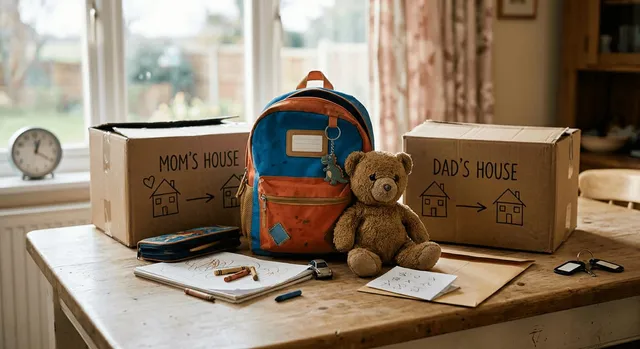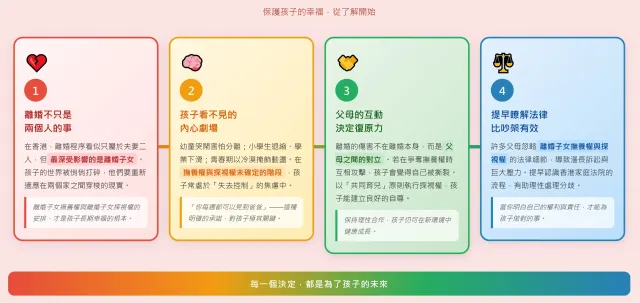
- Divorce is a traumatic experience for children, whatever their age or stage of development.
- The effect of divorce on children can vary widely, depending on the child’s age and the particular circumstances of the divorce.
- Keep your child’s life consistent and stable. If they can count on some things staying the same, they may feel safer.
- If the parents cannot agree on important matters, the court may step in and decide.
Divorce is a difficult and emotional process for everyone, but it can be especially hard on children.
Children of divorced parents are more likely to have emotional and behavioural problems. However, with the right support and understanding, children can get through the challenges of divorce and become stronger in the end.
Understanding how divorce affects children
Divorce is a traumatic experience for children, whatever their age or stage of development.
- Young children may not understand what is happening, and may feel abandoned or rejected by one parent. They may also have emotional outbursts, become clingy, or go back to earlier behaviour.
- School-age children may feel guilty or blame themselves for the divorce, and may struggle with their self-esteem.
- Teenagers may act out, rebel or withdraw, and they may feel a sense of loss and grief.
The emotional and behavioural changes children go through during and after a divorce can have long-term effects on their mental and physical health:
- Children of divorce are more likely to experience anxiety and depression, and may struggle with self-esteem and relationship problems.
- Children of divorce are also more likely to take part in risky behaviour, such as substance abuse or early sexual activity.
- Research shows that children of divorce may be at higher risk of health problems such as asthma, obesity and headaches.
Please note
- The effect of divorce on children can vary widely, depending on the child’s age and the particular circumstances of the divorce.
- Children who see high conflict and hostility between their parents may be affected more seriously and for longer than children whose parents are fairly friendly during the divorce.
- Advice on preparing before a divorce
- Rebuilding your life after divorce: how to look after yourself and start again
Worried about how divorce will affect your children?
Get in touch, and a dedicated consultant will first understand your situation.

How to support children during and after divorce
As a parent, it is important to understand that your children need support and understanding during a divorce.
Here are some tips for talking to your children about the divorce effectively:
- Be honest with your children, and tell them what is happening in a way that suits their age.
- Encourage your children to express their feelings, and listen to them without judging.
- Reassure your children that they are loved and that the divorce is not their fault.
- Let your children know they can come to you with any questions or worries.
During and after the divorce, it is also important to keep your children’s lives consistent and stable. This may include:
- Keeping them at the same school
- Keeping up their usual after-school activities
- Involving them in family traditions
Children thrive on routine and structure. If they can count on some things staying the same, they may feel safer.
Helping children cope with the changes and losses of divorce: the role of therapy and counselling
Another way to support children during and after divorce is to help them cope with the changes and losses that come with it. This may include:
- Giving them a sense of continuity and security
- Helping them understand their feelings and how to express them
- Encouraging them to stay in touch with friends and family
Therapy and counselling can also help children during a divorce. A therapist or counsellor can:
- Give children a safe, neutral space to express their feelings and deal with the emotional challenges of divorce
- Help children develop coping skills
- Improve their communication and problem-solving skills
- Help children build self-esteem
Not sure how to support your children through the changes of divorce?
If in doubt, feel free to contact our dedicated consultants.
Communicating with your ex-spouse and co-parenting after divorce
Divorce can be emotional, but it is important to talk openly with your spouse and look for a solution that serves everyone’s best interests.
That means being open to compromise and finding ways to work together towards an agreement.
Open communication can reduce stress and tension, and make the process less difficult for both of you.
Co-parenting after divorce
Co-parenting after divorce can be difficult, but it matters a great deal to your children’s wellbeing. Here are some strategies for co-parenting successfully:
-
Communicate well with your ex
For your children’s sake, it is important to communicate openly with your ex. That may include discussing important matters such as schedules, discipline and how you each speak to the children.
-
Put your children’s needs first
It is very important to put your children’s needs above your feelings about your ex. That means being flexible where necessary, being willing to compromise, and avoiding conflict in front of the children.
-
Keep things consistent and stable
It is important to keep your children’s lives consistent and stable. You can do this by keeping them at the same school, keeping up their usual after-school activities, and involving them in family traditions.
-
Seek mediation or counselling
If conflict between you and your ex is getting in the way of co-parenting, mediation and counselling can help. A neutral third party can help you both communicate more effectively, and offer support and guidance.
The role of joint custody in disputes over children is also worth considering: if you and your ex cannot agree on important matters, the court may step in and decide.
It is important to work with an experienced divorce lawyer, who can act for you and seek the best outcome for your children.
Beyond custody: the effects on children’s minds and bodies
Beyond custody, it is important to understand the emotional and behavioural changes children may go through, and to give them support and understanding.
Effective communication and co-parenting strategies can help children keep their lives consistent and stable, and therapy and counselling can give extra support.
Above all, put your children’s needs first, and seek help when you need it.
How do you put your children’s needs first?
Feel free to check your situation with us.