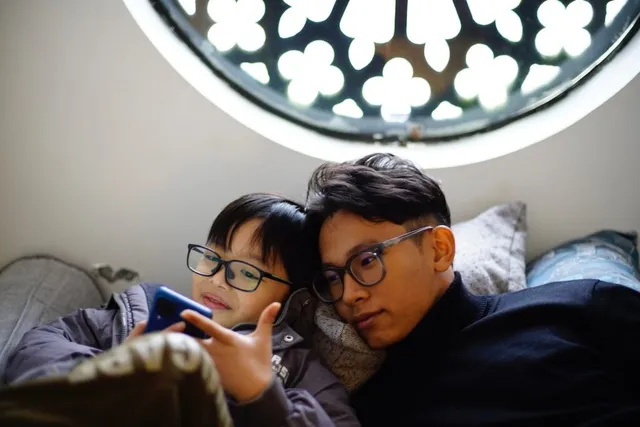
- The biggest blow to children in a divorce is losing their sense of security. When parents talk early and keep arrangements steady, they build a healthy base for custody and access.
- The Hong Kong Family Court puts the child’s best interests first. Custody, care and control, and access each have a different role and different legal considerations.
- Access protects the child’s bond with the parent they do not live with. The court has several types of access order, and technology can help keep the parent-child relationship going.
- Good co-parenting needs respect and cooperation. Mediation and psychological support can help parents move from opponents to teammates in caring for their children.
In Hong Kong, what worries people most after divorce is often the children. Besides parting emotionally, parents have to face questions of custody and access together.
This article explains how access after divorce and custody are decided in Hong Kong, and what to watch for.
How divorce affects children, and their resilience
In Hong Kong, divorce is a legal process between the spouses, but it is often the children who feel the impact most. Their world is reshuffled when their parents separate.
Some parents think “once the court has ruled, it is over”. But custody and access arrangements are what shape a child’s long-term happiness, and what they come to understand about “family” and “trust”.
Children of different ages react differently. Young children may cry at night, school-age children may slip in their grades, and teenagers may hide their unease behind coldness or rebellion.
Questions like “Who will be with me? Who will I live with?” can leave a child feeling “out of control” for a long time.
If parents give a clear explanation early, such as “you will see Daddy every week” or “Mummy will still call you every day”, that sense of security is vital for the child.
Psychological research shows that what hurts children is often not the divorce itself but the conflict between their parents. If parents stay calm and cooperate, children can still grow up healthy.
Family counselling cases in Hong Kong show that when parents run access on the principle of co-parenting, children tend to build better relationships and more self-confidence.
- Many parents think “the judge will decide custody in the end”. But without understanding it beforehand, they can end up in long litigation and stress.
- Others wrongly assume “isn’t access automatic?” Knowing the court’s principles early helps you deal with disagreements calmly.
Understanding how the Hong Kong Family Court works early helps parents make the right decisions for their children, even in the middle of strong emotions.
- Staying together for the children: the myth, and the pros and cons of divorce for children
- Signs of marriage breakdown in Hong Kong: emotional neglect and the right time to divorce
- Common reasons and grounds for divorce in Hong Kong
No clear idea yet about custody and access?
Talk to us to check your situation and the documents you need.

The custody system for children of divorce in Hong Kong
“Custody of children after divorce” is an umbrella term in Hong Kong law. It covers three parts, each with a different role: custody, care and control, and access.
| Notes | Usually held by | |
|---|---|---|
| Custody | The final say on major decisions about the child, such as education, medical care and religion | Can be held by either parent alone, or by both together |
| Care and control | Day-to-day care and discipline, including meals, accommodation and daily routine | Usually the parent the child mainly lives with |
| Access | Lets the parent who does not live with the child keep in touch and meet them | Usually the parent without custody, or the parent the child does not live with |
Understanding how the three divide the work helps parents plan how custody and access will work in practice.
In all these cases the Hong Kong Family Court’s final test is “the best interests of the child”. The judge does not take sides, and asks only “which arrangement is best for the child?”
Under section 3 of the Guardianship of Minors Ordinance (Cap. 13), parents stand equal in law. The judge weighs the following factors together:
- The child’s age and health
- The child’s emotional attachments
- Each parent’s ability to provide a stable home
- The child’s education and developmental needs
- Each parent’s psychological state, finances and time available
- Any possible abuse or risk
The Hong Kong Family Court commonly makes three types of custody order: a sole custody order, a split custody order and a joint custody order.
Whichever arrangement applies, access is almost always kept for the other parent, unless there is a clear risk.
| Features | When it suits | Advantages | Disadvantages | |
|---|---|---|---|---|
| Sole custody order | One parent has full responsibility; the other has limited influence | Parents in long-term, serious conflict | Decisions are quick and clear | The other parent’s role can easily be sidelined |
| Split custody order | Responsibility for education and for day-to-day care is handled separately | Suits cases where one parent often travels or works long hours | The division of roles is more flexible | Harder to carry out, and more likely to cause disputes |
| Joint custody order | Major matters are decided jointly, while one parent handles daily care. The court often encourages this arrangement | Suits parents who can still communicate and cooperate | The child keeps receiving care from both parents | If conflict grows, it adds to the child’s stress |
This comparison gives parents a first idea of which arrangement may suit their situation best.
The judge will also look at a social worker’s home-visit report and a psychologist’s assessment, to understand the parents’ living conditions and parenting style, and where the child’s emotional ties and sense of safety come from.
If there is a dispute, the court can start a “Child Dispute Resolution” process, in which professionals help parents negotiate custody and access. This is usually better than a formal trial at keeping communication going.

- Hong Kong Family Court divorce procedure, online booking and the forms and documents you need
- Divorce mediation in Hong Kong: the process and its benefits
- Legal aid for divorce in Hong Kong: solicitors’ fees, procedure and how long it takes
Access to children after divorce: practical arrangements
Access is not just a formal “meeting schedule”. It is an important bridge for the trust and emotional bond between parent and child.
The Hong Kong Family Court sees access as a basic right of the child, not a “favour to the parent the child does not live with”.
Children need a stable relationship with both parents. Even when custody goes to one parent, the other should still keep up regular access and contact.
- Reasonable access order: the parents arrange the visiting times themselves. It is flexible, and needs a degree of mutual trust.
- Defined access order: the court sets out details such as dates, time slots and handover places. It suits parents who communicate poorly.
- Supervised access order: where there is a risk of child abuse, violence or psychological harm, visits take place under a social worker’s supervision to keep the child safe.
Access arrangements can change over time, for example moving from supervised to unsupervised access. The judge will vary the order according to the child’s welfare and the parents’ conduct.
- Weekend access: weekends with the parent the child does not live with, every week or every other week.
- Short weekday visits: a few hours together after school.
- Alternating holidays: for example Lunar New Year with Dad, and the next holiday with Mum.
- Video or phone access: common especially over long distances or during the pandemic.
Access is often disrupted by last-minute cancellations, delayed handovers or running down the other parent in front of the child. This damages the access arrangement and can harm the child’s mental health.
-
Keep evidence
Keep records of messages and evidence of cancelled visits
-
Communicate in writing
Try communicating in writing, or have a solicitor coordinate
-
Applying for enforcement
If the problem continues, you can apply to the court for an enforcement order
If access is refused seriously, the court may even review custody. If the parent the child does not live with puts pressure on the child or poses a danger during visits, they can also ask the court to suspend access and reassess.
The Hong Kong Family Court has the power to reprimand or punish anyone who breaks an order. But the emphasis remains on encouraging communication, so the child is not harmed by the conflict.
- Phone calls, WhatsApp, video calls and shared online activities can all make time together without being in the same place feel warmer.
- The parent with custody should stay open-minded, and should not listen in on or interfere with the child’s communication.
- Divorce and domestic violence in Hong Kong: procedure, getting help and claiming compensation
- Divorce and single-parent families in Hong Kong: support services, allowances and subsidy policies
- How to support a friend going through divorce in Hong Kong
Access and custody in Hong Kong: co-parenting to rebuild a stable home
A custody and access ruling is only a document. What decides a child’s happiness is how the parents carry it out. Children are not a prize to be won but a responsibility. The law protects them only if you follow it through with care.
Children fear change most. When parents run access to a clear timetable, using a shared e-calendar or a colour-coded visual calendar, the child knows exactly when they will see Dad and when they will see Mum.
This reduces confusion and anxiety.
Please note
- Many parents make children “take sides” without meaning to, with remarks like “your dad doesn’t care about you” or “your mum can’t be trusted”. This leaves the child torn, and can lead to anxiety or self-blame.
Healthy co-parenting rests on respect and cooperation. Children need to know that “although Mum and Dad are apart, they both love me.”
- Family mediation services: a neutral place to negotiate custody and access arrangements.
- The Social Welfare Department runs “Integrated Family Service Centres” and child counselling support.
- Clinical psychologists and child therapists: help children deal with trauma, anxiety and expressing their feelings.
Mediation often finds a workable solution more readily than going to court, and psychological support helps parents learn to be good parents after separation.
- Keep communication focused on the children’s matters.
- Keep to the access timetable.
- When you disagree, put the child’s interests first.
- Don’t argue in front of the children.
- Keep in touch in a brief, polite tone.
Some families use a “co-parenting app” to record access and expenses. It reduces misunderstandings and lets both sides remain good teammates in raising the child.
| How it is going | Suggested action | |
|---|---|---|
| Respect the other parent’s role | ☐ Yes ☐ No | Avoid criticising or blaming the other parent in front of the child |
| Follow court orders willingly | ☐ Yes ☐ No | Be on time for visits and handovers |
| Talk to the child regularly about how they feel | ☐ Yes ☐ No | A fixed weekly time to talk |
| Be open when seeking professional help | ☐ Yes ☐ No | Tell the other parent about the progress of any treatment or counselling |
This checklist helps parents adjust their behaviour and make sure arrangements really happen, and it brings the focus back to “the child’s best interests”.
Many Hong Kong families have been through the same difficulty. Children may cry and feel confused, but if their parents are willing to protect them together, they will come to feel that the love has not gone. It has only changed form.
Divorce is not an ending but a new beginning. Love for your children is not measured by winning or by custody, but by being willing to go one step further for them every day, even if it is just turning up on time for that visit.

- How divorce affects children in Hong Kong, and ways to support them
- How children adjust to a new family after divorce, and how stepfamilies can help them thrive
- How to rebuild your life after a divorce in Hong Kong
Co-parenting arrangements hard to carry out?
Talk to us about mediation and support.