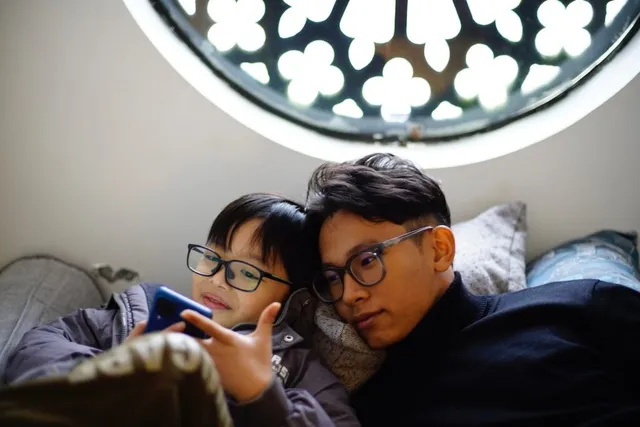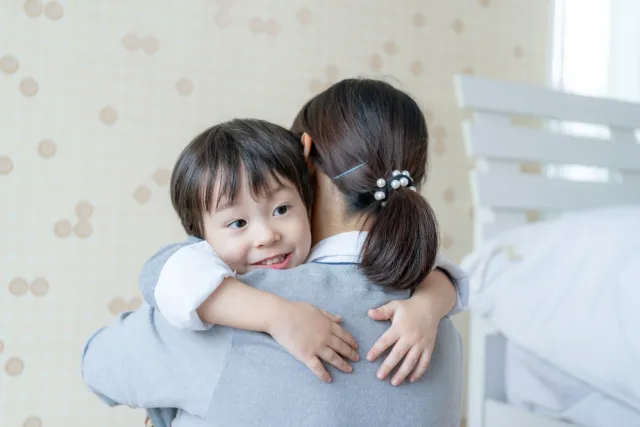
- After a divorce, a stable and safe home and an orderly daily routine matter a great deal to children.
- Parents should involve their children in building the new family, and take their views and needs into account.
- Before remarrying, talk to your children early about the new arrangements, and agree the children’s arrangements with your former spouse.
- Avoid forcing children to call a stepparent “Mum” or “Dad”, and tell your current spouse when you speak to your former spouse.
Divorce has a major effect on the whole family, and especially on children after divorce. Children may feel low, angry, afraid and unsettled, and may even blame themselves or feel lonely.
If you remarry and form a stepfamily, the parents’ role is very important in helping the children adjust to their new family life.
Helping children adjust to a new family after divorce
After a divorce, parents should give their children a stable home, a good parent-child relationship and a stable school life, to help them adjust to the new family.
Create a stable home
- A stable and safe home is very important to children. Parents should try to keep their home and living environment steady, so that children do not feel anxious or insecure.
- Set up an orderly daily routine, for example fixed times for meals, sleep and family activities, to help children settle into a steady rhythm.
- Keeping family values consistent, such as views on education, morals and religious belief, also helps children keep a stable home life.
Encourage a good parent-child relationship
After a divorce, a good parent-child relationship can ease children’s unease about the divorce.
Parents should encourage open and honest communication, build trust and respect with their children, and be caring and attentive to their emotional needs.
Parents should spend as much time as they can with their children, so that the children feel cared for and supported.
Please note
- When you are with your children, try to keep arguments to a minimum, and avoid criticising the other parent in front of them.
- Watch what you say and do. Do not show anger or other negative feelings to your children, so that their emotional development is not affected.
Keep a stable school life
Divorce can also affect a child’s learning and growth, so parents should keep their schooling as stable as they can:
- If your child has to change schools, keep in good contact with the school and let the teachers know the child’s situation, so that they can support the child’s studies and wellbeing.
- Follow your child’s progress and achievements, and encourage them to improve.
- If your child needs extra help with learning, you can consider a private tutor or tutorial classes, so that they do not fall behind.
How can you keep a stable home for your children?
Feel free to check your situation with us.

Involve your children in building the new family and give them emotional support
After a divorce, parents may remarry or start a new family. Parents should involve their children in building the new family, and take their views and needs into account.
For children, this is also a process of getting used to a new home. For example, parents can do things together with their children:
- Decorate the new home, letting the children help with the design and decoration so that they feel part of the family.
- Plan family activities, such as trips and sports, to strengthen the bonds between family members.
Offer emotional support and professional help
If children cannot adjust to the new family, or show clear emotional difficulties, parents should offer emotional support and professional help promptly, for example:
- Encourage your child to talk to a counsellor or a child psychologist, who can help them understand and cope with their feelings.
- Attend talks or seminars on children’s mental health to learn how to support your child better.
Parents should keep their own emotions steady, respect their children’s feelings and needs, and give them plenty of support and attention.
With these methods and suggestions, parents can help their children adjust to the new family better, and build a stable, healthy and happy family life.
More tips on the divorce procedure:
- How do I apply for a divorce?
- Divorce mediation in Hong Kong: the process and its benefits
- Decree nisi and decree absolute in Hong Kong
- Hong Kong divorce agreements, petitions and joint applications explained
Getting ready emotionally before remarrying
Before remarrying, watch for emotional issues carried over from the previous marriage. Talk to your children early about the new arrangements, agree the children’s arrangements with your former spouse, and seek the acceptance and support of relatives and friends.
Here is how to prepare emotionally before remarrying:
- Watch for emotional issues carried over from the previous marriage (such as resentment, regret and hurt), so that they do not affect the new marriage and add extra pressure.
- Reflect on what you expect from a stepfamily. Do not marry only for the children’s sake. Build the marriage on mutual understanding and affection, so that the children do not feel burdened.
- Prepare yourself for the challenges of the new life. Do not assume that problems from before the marriage will solve themselves.
- Talk to your children early about the new arrangements, for example getting along with a future stepparent and stepbrothers and sisters, and let them know about the new home and living arrangements.
- Agree the children’s arrangements with your former spouse early, such as parenting style and schooling, to reduce disputes once the new family is formed.
- Seek the acceptance and support of relatives and friends, so that they become a strong source of help for the stepfamily.
Common problems when remarrying
These are the common problems when someone who has been married before remarries:
- The end of the last marriage makes them feel insecure about intimacy, and it is hard to commit fully to the present marriage.
- They still cannot let go of their former spouse, and without meaning to they compare them with the current one.
- Emotional baggage from the past makes them sensitive in the present marriage, and afraid of being hurt again, so they become guarded.
- They hope the present marriage will make up for what was missing in the last one.
- If the current spouse is marrying for the first time, their expectations of marriage may be higher than those of the remarrying partner. When the remarrying partner cannot share their excitement and joy, they may feel guilty.
More articles on life after divorce:
- Advice on preparing before a divorce
- What women should think about and prepare before divorcing
- Rebuilding your life after divorce: how to look after yourself and start again
- How divorce affects children in Hong Kong, and ways to support them
- How to secure the best maintenance after divorce
- Is a wife always entitled to half the assets on divorce?
- What happens to the property and mortgage after divorce
- Housing arrangements for public rental flats after divorce
Are you emotionally ready to remarry?
Get in touch, and a dedicated consultant will first understand your situation.
Problems when remarrying with children from a previous marriage
People who remarry with children from a previous marriage often meet these problems:
- They feel guilty towards their children and hope the current partner will fill the parenting role, but find the partner cannot do so as well as they expected.
- Children of the remarriage show resistance towards their stepparent.
- They want to meet the needs of both their children and their current partner, but often feel torn and unappreciated for their effort.
- They put their children first, neglect their partner’s emotional needs, and are blamed for it.
- When they speak to a former partner about the children’s upbringing, the current partner feels uneasy and suspicious.
- To make up for the harm the children suffered from the parents’ divorce, they resist the idea of having another child with the current partner, and expect that partner to care for the children from the previous marriage as devotedly as they do.
More articles on marriage:
- Is divorce or separation better? The pros and cons of divorce and separation
- Common reasons and grounds for divorce in Hong Kong
- How social media and technology can become a catalyst for divorce in Hong Kong
- Signs of a marriage breaking down in Hong Kong: the effects of emotional neglect, and the right time to divorce
- Sexless marriage in Hong Kong: a warning sign of divorce?
- What to know about affairs and infidelity in divorce in Hong Kong
How to build a happy second marriage
To build a happy second marriage, reflect on why you are remarrying and what you expect, and balance the relationships between the children, your former spouse and your current spouse.
Everyone hopes to find a partner who loves them and whom they can trust, yet remarriage is a complex and difficult process for many people. Here are some suggestions:
- Reflect on why you are remarrying and what you expect: a good marriage is built on love and trust. If you remarry to fill the place of the parent your children have lost, there may be a big gap between your expectations and your new spouse’s.
- Avoid forcing children to call a stepparent “Mum” or “Dad”: even after a marriage breaks down, the blood tie between birth parents and children cannot be replaced or cut. Asking a child to call a stepparent Mum or Dad will make the child resentful.
- Tell your current spouse when you speak to your former spouse: if you need to talk to your former spouse about custody of the children, let your current spouse know. This can effectively reduce needless suspicion and unease.
- Care about your current spouse’s feelings and needs: even if you love your children deeply, you should still look after your current spouse’s feelings and needs. Spending regular time together strengthens the marriage and makes the family more harmonious.
- When you consider remarrying, having children is often an important factor: if you do not want more children, tell your partner honestly before you choose to remarry, to avoid resentment and complaints caused by differing expectations.
Respect the child’s bond with their birth parents
- Even after their parents divorce, many children still hope their parents will get back together. When a stepparent appears, that hope is dashed.
- It is a normal reaction for a child to resist a stepparent. Parents should give the child time to accept the reality of the divorce, and slowly come to accept the stepparent.
A good marriage is the foundation of a healthy family.
More articles on improving your marriage:
- Tips for couples to communicate when you do not want to divorce or break up
- How couples can keep their marriage strong and prevent divorce
- Does marriage counselling in Hong Kong help?
- Benefits of family mediation for Hong Kong families
- The best ways to nurture a marriage in Hong Kong
- Marriage counselling organisations in Hong Kong: an introduction, marriage counselling hotlines and fees
- How to support a friend going through divorce in Hong Kong
How can you build a happy second marriage?
If in doubt, feel free to contact our dedicated consultants.