- Among Hong Kong residents aged 50 or above, the share who are divorced or separated has risen nearly 5 times in 25 years.
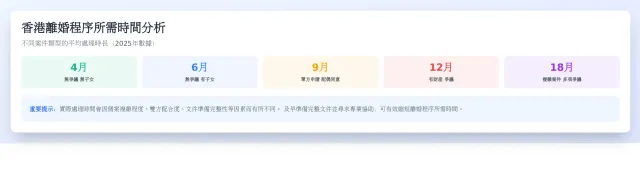
- Most couples in this age group petition on the “2 years’ or 5 years’ separation” ground, and the case is usually finished in 6–9 months.
- After a long marriage, assets are usually split 50:50. The key points are the matrimonial home, MPF, wills and updating insurance beneficiaries.
- The court tends to order a “Clean Break”, a one-off final settlement, to avoid long-running disputes.
More and more couples who have been married for 30, 40 or even 50 years or more are choosing to let go of each other’s hand in the second half of life.
This wave is called “grey divorce” in the West and “jukunen rikon” in Japan. In Hong Kong it has become much more visible over the past 5 years.
What Is Grey Divorce? Definition and the Latest Hong Kong Trend
In this article, “grey divorce” and “later-life divorce” mean the same thing: a divorce where the spouses are 50 or above and the marriage has lasted more than 15 years.
Grey Divorce vs Later-Life Divorce vs “Twilight Divorce”: What Is the Difference Between These 3 Terms?
In Chinese-language media, “grey divorce”, “later-life divorce”, “twilight divorce” and “jukunen rikon” are often used interchangeably, but each has a slightly different meaning:
- Grey Divorce: a concept that came from the United States in 2004. It generally means a couple aged 50 or above divorcing after a fairly long marriage.
- Later-life divorce: a term used by media in Taiwan and some in Hong Kong. It covers divorce from middle age to old age, so the age range is wider (it can start from 45).
- Jukunen rikon: the Japanese term. It usually means a couple divorcing after 20 years or more of marriage, and stresses length of marriage rather than age.
- Twilight divorce: the everyday term on the Mainland, with the emotional sense of “the twilight years of life”.
Latest grey divorce figures in Hong Kong
Census and Statistics Department figures show that, among Hong Kong residents aged 50 or above, the share who are divorced or separated has risen nearly 5 times in 25 years.
According to figures published by the Hong Kong Census and Statistics Department, the trend in later-life divorce here is clear:
- In 1991, only 2.3% of women aged 50–54 were divorced or separated.
- By 2016 the figure had risen to 10.2%.
- In recent years it has climbed further, to roughly 12–13%.
By comparison, the rise for women aged 40–44 over the same period was only 5.7 percentage points. Grey divorce is clearly growing much faster than divorce among younger groups.
Global comparison: the UK, US, Japan and China show the same trend
- United Kingdom: according to the Office for National Statistics (ONS), men aged 60 or above made up 3.7% of all divorces in 1995 and 9.7% in 2017, which is more than double.
- United States: the divorce rate among people aged 50 or above rose from 5 per 1,000 married people in 1990 to 10 per 1,000 in 2015.
- Japan: figures from the Ministry of Health, Labour and Welfare show that divorces after 20 years or more of living together (“jukunen rikon”) have reached a record share.
- Mainland China: the divorce rate among people aged 60 or above has almost doubled compared with 30 years ago.
Grey divorce is not unique to Hong Kong. It is a new issue shared by ageing societies around the world.
Not sure whether your situation counts as a later-life divorce?
Feel free to check your situation with us.

Why Do Couples Divorce Later in Life? 6 Real Reasons
Later-life divorce is mostly linked to the empty nest, friction from being together 24 hours a day after retirement, longer life expectancy, women’s financial independence, and a high rate of second divorces among the remarried.
Reason 1: After the children leave, you find you have “nothing to say”
Once the children are grown and have left home, the shared goal of raising them is gone and the understanding between the couple disappears with it. This is a classic sign of a failing marriage:
- Emotional neglect
- Avoiding communication
- Sleeping in separate rooms
- No shared topics left
Reason 2: Being together 24 hours a day after retirement brings conflict to a head
In one UK interview, a 65-year-old man admitted: “I used to see my ex-wife for a few hours every evening. After I retired we were together 24 hours a day, and I found our ways of living were very different.”
Things that were always separate, and that retirement forces a couple to face, include:
- Work
- Circles of friends
- Hobbies
Reason 3: Longer life expectancy, and not wanting to put up with the next 20–30 years
According to the World Health Organization, average life expectancy worldwide rose from 66.5 years in 2000 to 72 years in 2016. Women in Hong Kong now live to more than 87 on average.
The thought “I still have 20-odd good years ahead” leads many people in their 50s and 60s to stop settling.
Reason 4: Women’s financial independence and changing attitudes to marriage
In the past, the financially weaker spouse (often the wife) did not dare to divorce for fear of losing financial security. The obstacles to divorce have now fallen sharply:
- Most women in their 60s in 2026 have had a solid career, with their own pension and property.
- Society no longer sees divorce as a “disgrace”.
- The US General Social Survey also found that between 2002 and 2012, the share of people in every age group who agreed that “divorce is an acceptable way to resolve a marital crisis” rose significantly, with the biggest change among older people.
Reason 5: Remarried people divorce again more often
The US Pew Research Center reports that for baby boomers aged 50 and over, the divorce rate in a remarriage is twice that of a first marriage. Researchers explain:
- Remarried couples often differ more in personality.
- The couple have been together for a shorter time.
- People who have divorced before are more likely to choose separation again when the marriage hits a low point.
Reason 6: Years of resentment, domestic violence or an affair finally erupt
Some grey divorces are not a “sudden blow-up”. Resentment held in for 20 or 30 years finally bursts after retirement.
Long-term domestic violence, gambling debts, affairs and emotional abuse lose their reason to be endured “for the children” once the children are independent, and everything is settled at once.
Self-Check Before a Later-Life Divorce: 5 Questions on Divorce, Living Apart by Agreement or Separation
Before you take the step of divorcing, answer these 5 questions honestly and make a calm decision:
-
Is this a “temporary slump” or a “real breakdown”?
Ask yourself: have the problems lasted more than 3 years? Have you tried marriage counselling? Could this just be short-term friction while adjusting to retirement? If so, “sotsukon” (a marriage you graduate from without divorcing) or a short separation may be a better choice.
-
Can your finances support two homes for the next 20 years?
After medical and long-term care costs, do your pension, MPF, property and savings add up to enough for one person to live on for 20 years? For Hong Kong residents aged 70 or above, monthly medical and living costs are estimated at about HK$15,000–25,000.
-
Health and care needs
If one of you already has a chronic illness or signs of cognitive impairment, you need to think through who will provide care after the divorce, and how residential or home care will be arranged.
-
How your children and family will be affected
Adult children react very differently to their parents’ divorce. Talking openly beforehand can reduce family disputes over inheritance later.
-
Are there alternatives?
You do not have to go as far as a legal divorce. “Sotsukon”, legal separation, marriage therapy and living apart for a while are all middle options you can consider first.

Grey Divorce vs Sotsukon vs Separation: How to Choose Between the 3
A Japanese author put forward the idea of “sotsukon” in the book “Sotsukon: The Happy Choice of Not Divorcing”. “Sotsu” means “to graduate”.
Sotsukon means graduating from the marriage without going through divorce: each partner lives their own life, wishes the other well and respects what the other wants to do.
A 2014 Japanese survey found that 56.8% of Japanese women aged 30–69 had considered sotsukon.
If you are torn between divorce and separation, the table below may help:
| Grey divorce | Sotsukon | Legal separation | |
|---|---|---|---|
| Legal status | Marriage fully ended | Still married | Still married |
| Dividing property | One-off formal division | Private agreement | Can apply for a court order |
| Inheritance rights | Both lose inheritance rights | Inheritance rights kept | Inheritance rights kept |
| Freedom to remarry | Fully free | Not allowed | Not allowed |
| Insurance beneficiary | Must be reassigned | Usually kept | Usually kept |
| Emotional ties | Fully cut | Good wishes kept | Half cut |
| Best for | A complete breakdown, and plans to remarry | Wanting space but still having feelings | Wanting to try living apart while keeping options open |
If your spouse still shows basic respect and the problem is just living together, sotsukon or separation may be a gentler choice.
But where there is domestic violence, gambling debts, an affair or emotional abuse, only a formal divorce can fully protect your rights.
The Full Legal Procedure for Grey Divorce in Hong Kong
Most couples in this age group petition on the “2 years’ or 5 years’ separation” ground, and the case is usually finished in 6–9 months.
Step 1: Consult a solicitor or a family mediator
For your first consultation, we suggest you bring:
- Marriage certificate
- Both spouses’ ID cards
- Property deeds
- MPF contribution records
- Bank passbooks
- Insurance policies
A later-life divorce involves complex assets, so choose a solicitor who has handled cases after long marriages.
Step 2: File your application with the Family Court
There are two ways to divorce when you apply to the Family Court:
- Both spouses agree (joint application): the procedure is faster and is usually completed within 6–9 months.
- Petition by one spouse (petition form): you must show that the marriage has broken down irretrievably. The grounds are adultery, unreasonable behaviour, desertion for 2 years, separation for 2 years (with the other spouse’s consent) or separation for 5 years (no consent needed).
The usual route for later-life couples is “2 years’ separation”. Many long-married couples already sleep in separate rooms or live apart in fact, and only need to apply when the time is right.
See the Judiciary’s Family Court guidance for the latest forms.
Step 3: Decree nisi, then decree absolute
- Decree nisi: the court gives its first approval of the divorce.
- Decree absolute: you can apply for it 6 weeks after the decree nisi, and it formally ends the marriage.
Step 4: Common ways to speed up a later-life divorce
- Both agree on the facts of the separation, to avoid delay from disputes
- Reach agreement on property beforehand through a family mediator
- Choose a “Clean Break” (a one-off final settlement) rather than long-term maintenance, to reduce later disputes
- Organise MPF, insurance, wills and other documents early, to avoid delays from missing papers
To understand the overall time and cost, see How long and how much does a divorce take? Hong Kong divorce procedure, cost and preparation explained.
Not sure which way to divorce is right for you?
If in doubt, feel free to contact our dedicated consultants.
Property Division in Later-Life Divorce: 3 Core Issues, and Maintenance for Older Spouses
When the Family Court deals with a divorce after a long marriage, it generally applies the “50:50 equal division” principle, as long as both spouses’ needs are met.
The reason is that both spouses have retired or are close to retirement and can earn about the same, so there is no need to weigh “future income differences” as with a younger couple.
In practice, however, there are still 3 core issues to handle carefully:
- The matrimonial home (sell vs one spouse keeps it)
- MPF and pension division
- Updating insurance, estate and family trust arrangements
Issue 1: The matrimonial home (sell vs one spouse keeps it)
After a long marriage, the home usually has no mortgage or only a small one. There are 3 ways to deal with it:
- Sell and split the proceeds: the cleanest option, and each spouse then buys a small flat or rents.
- One spouse keeps it: the other is compensated from other assets (such as MPF or insurance).
- Keep joint ownership and decide later: not recommended, as it easily leads to disputes down the line.
Please note
- People of this age find it harder to get a new mortgage from a bank, and age is usually the key limit.
Issue 2: MPF and pension division
MPF built up during the marriage is matrimonial property and needs to be divided equally.
For people divorcing in their 60s, the MPF built up by the main earner may be the largest financial asset, even worth more than the property.
Please note
- Under the rules of the MPFA (Mandatory Provident Fund Schemes Authority), an MPF division on divorce can be carried out by court order. However, MPF is an “illiquid asset”, so the court may discount its present value when assessing it.
Issue 3: Updating insurance, estate and family trust arrangements
After the divorce, deal with the following straight away:
- Update the beneficiary of your life insurance (it may name your spouse)
- Update the person named in your Enduring Power of Attorney
- Update your will (if it leaves everything to your spouse, you need to rewrite it after the divorce)
- Review the beneficiary terms of any family trust
- If you plan to remarry, consider a prenuptial agreement to protect children from the first marriage
3 Big Traps in Dividing Property After a Long Marriage
- Overlooking “hidden assets”, such as overseas property, cryptocurrency and company shares, which one spouse can easily conceal.
- Underestimating future medical costs: after the assets are split, you find there is not enough to pay for a care home.
- Not considering tax: Hong Kong has no estate duty, but overseas property may be subject to inheritance tax in that country.
Maintenance in Later-Life Divorce: Where Does the Money Come From?
The court tends to order a “Clean Break”, a one-off final settlement, to avoid long-running disputes.
Maintenance in a later-life divorce is considered very differently from a divorce between younger spouses:
- Younger couples: the court usually orders continuing monthly payments, taking into account the children’s upkeep and the difference in income.
- Older couples: because both are close to or past retirement age, can earn about the same and have no minor children to look after, the court is more likely to order a “Clean Break” (a one-off final settlement). The assets are divided once and for all, and neither can claim from the other later.
When will the court still order continuing maintenance?
- One spouse has a serious disability or major illness and cannot look after themselves
- One spouse has had no work for many years (for example, a full-time homemaker) and has no retirement savings
- One spouse has clearly been at fault (for example, a long-running affair or desertion)
- The matrimonial home must be lived in by one spouse for the rest of their life
Guide to maintenance amounts for older spouses
The court will consider:
- Ages
- Health
- Income
- Assets
- Length of marriage
- Standard of living
- Contribution to the family
Actual amounts vary enormously, from a few thousand to tens of thousands of Hong Kong dollars a month.
For details of how it is calculated, see A guide to calculating maintenance in Hong Kong: how long you pay and when it stops.
Rebuilding Life After a Later-Life Divorce: 3 Big Challenges and How to Meet Them, and How Adult Children Can Cope
After a later-life divorce, give equal weight to emotions, social life and health. Adult children should stay neutral and help, but not take charge.
US research shows that recently divorced older people often show signs of depression, anxiety and post-traumatic stress disorder, which can lead to physical problems such as heart disease, Parkinson’s disease and type 2 diabetes.
Challenge 1: Rebuilding emotionally
- Contact a counselling organisation yourself (such as the Hong Kong Sheng Kung Hui Counselling Service, the Hong Kong Family Welfare Society or Caritas)
- Join a support group for older people
- Build a regular daily routine
- If you feel low for more than 2 weeks, ask a psychiatrist for help
Challenge 2: Rebuilding your social circle
Long-married couples often share a circle of friends, and after a divorce “friends take sides”. We suggest you:
- Join hobby classes (calligraphy, tai chi, hiking, dancing, group tours)
- Take part in activities at an elderly centre
- Reconnect with old classmates and former colleagues
- Learn new skills (such as 3C gadgets or a foreign language) to widen your circle
See How to rebuild your life after a divorce in Hong Kong for more specific steps.
Challenge 3: Health and care arrangements
- Buy medical or critical illness insurance early (some policies cannot be taken out after age 65)
- Choose a home with a lift, near the MTR and near a hospital
- Find out in advance about care home waiting lists and home care services
- Make an Advance Directive (a medical instruction) and an Enduring Power of Attorney
How should adult children handle their parents’ later-life divorce?
As part of the “sandwich generation”, middle-aged children must look after their own family and career while also helping their parents through a complicated divorce procedure.
These 4 principles can reduce family conflict:
- Stay neutral: do not take sides, as this makes the parents’ conflict worse
- Respect their decision: your parents have the right to choose how to live the second half of their lives, even if you disagree
- Help, but do not take over: you can help find a solicitor and organise documents, but do not make decisions for your parents
- Talk about inheritance early: if a parent plans to remarry, talk openly and early about family assets and inheritance
If brothers and sisters disagree, you can hire a neutral family mediator to stop the family conflict from escalating.

- Preparing mentally for divorce, and how counselling helps mental health
- How divorce affects children in Hong Kong, and ways to support them
Adult child, unsure how to handle your parents’ later-life divorce?
Get in touch, and a dedicated consultant will first understand your situation.